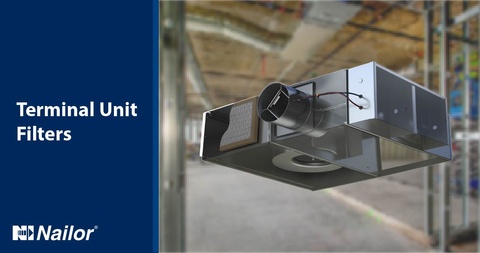
Fan powered terminal units are designed to deliver reliable zone comfort without the need for terminal‑level filtration during normal building operation. Yet questions around filters continue to surface—most often during construction, when protecting equipment from dust and debris becomes a concern.
Understanding when filters are helpful—and when they are not— can help avoid unnecessary maintenance, access challenges, and long‑term operating costs.
During construction, exposed induction openings can allow drywall dust and jobsite debris to enter the unit and associated ductwork. For this reason, temporary protection is commonly used to help keep equipment clean prior to occupancy. This may take the form of temporary filters or simple covers installed over the induction opening.
Once interior construction is substantially complete, a clean, disposable filter may be used briefly during final fit‑out. This temporary measure is intended only to protect the unit until the space is ready for turnover. During airflow measurement and balancing, any temporary filter should be removed to ensure accurate readings.
After turnover, fan powered terminal units are intended to operate without filters at the terminal. Permanent filtration at this location is not required for comfort or system performance and can introduce unnecessary maintenance considerations over the life of the building.
The key takeaway is simple: filters at fan powered terminal units are a construction‑phase protection measure, not a permanent operating requirement. Understanding this distinction helps preserve equipment performance while keeping long‑term operation straightforward.
For detailed engineering guidance, refer to the original bulletin:
Filters on Fan Powered Terminal Units – Engineering Bulletin (PDF)