Nailor Airwaves is your source for content on relevant topics concerning Nailor Industries, Inc. and the HVAC industry. New product releases, case studies, product & project spotlights, employee interviews, trade publication articles, and general announcements are some of the content types you can expect to find in the Nailor Airwaves.
Nailor Airwaves
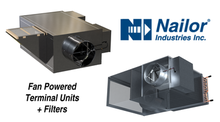
Filters on Fan Powered Terminal Units
Summary
Adding a filter that has greater efficiency than just a throwaway fiberglass filter can be done but could require modifications to the unit. Each individual unit’s size, design, and operating environment would have to be considered to determine the right route to take to ensure the performance of the unit is not compromised by the addition of the filter. Also, this analysis was done considering the initial pressure drop across the filter. As the filter is used and becomes “clogged” with filtrants the pressure drop will increase. This must be considered for replacement schedules depending on how much static pressure you have with the design of the unit.
Additional consideration would have to be given to the cost and potential problems associated with the… Read more
Energy Efficiency: Water Source Heat Pumps
One of the most important factors in selecting any piece of HVAC equipment is energy efficiency. In my previous article I discussed how the critical components of the WSHP works to deliver conditioning to the space. Here I’ll discuss how energy efficiency is calculated, tested, and communicated along with measures that providers can take to increase the efficiency of their product.
Energy efficiency is the measure of how much cooling/heating you get for each unit of energy put into the equipment. More efficient equipment utilizes less energy for the same amount of conditioning and therefore costs less to operate. Water source heat pumps use two units of efficiency for communicating their performance: Energy Efficiency Ratio (EER) and Coefficient of… Read more
How Water Source Heat Pumps Work
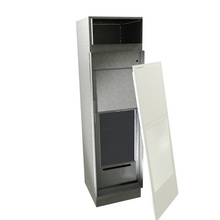
Most people are familiar with a standard residential split air conditioning system. It is split because the indoor system blows the cooled or heated air and the outdoor unit makes a lot of noise when it’s operating. These two pieces of equipment are connected by piping that carries refrigerant between them. The outdoor unit contains a compressor, outdoor coil, and fan. During cooling the compressor will compress the refrigerant into a superheated gas, then force it through the outdoor coil. The fan draws the outside air through the coil so that the superheated gas cools. The refrigerant flows to the indoor unit that rapidly expands the high pressure cooled liquid to create a low-pressure low temperature gas that enters the indoor coil and the indoor fan… Read more
How Water Source Heat Pumps Work
Most people are familiar with a standard residential split air conditioning system. It is split because the indoor system blows the cooled or heated air and the outdoor unit makes a lot of noise when it’s operating. These two pieces of equipment are connected by piping that carries refrigerant between them. The outdoor unit contains a compressor, outdoor coil, and fan. During cooling the compressor will compress the refrigerant into a superheated gas, then force it through the outdoor coil. The fan draws the outside air through the coil so that the superheated gas cools. The refrigerant flows to the indoor unit that rapidly expands the high pressure cooled liquid to create a low-pressure low temperature gas that enters the indoor coil and the indoor fan… Read more
How a Water Source Heat Pump Works: Thermodynamics 101
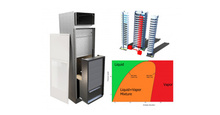
In my previous article, located here, I discussed the benefits of selecting a water source heat pump system for your building. The next few articles will discuss how the heat pump works.
The heating and cooling provided by a water source heat pump, and for that matter all refrigerant based conditioning equipment, is made possible by the refrigeration cycle. Mechanical equipment pressurizes and cools refrigerant to achieve the desired temperatures needed to heat or cool the air in a space.
Gas and Liquid substances generally follow the relationships explained by the ideal gas law:
With this equation, if you know the pressure, volume, and amount of substance you can calculate the temperature. This also provides the relationship between Pressure, Volume, and… Read more